
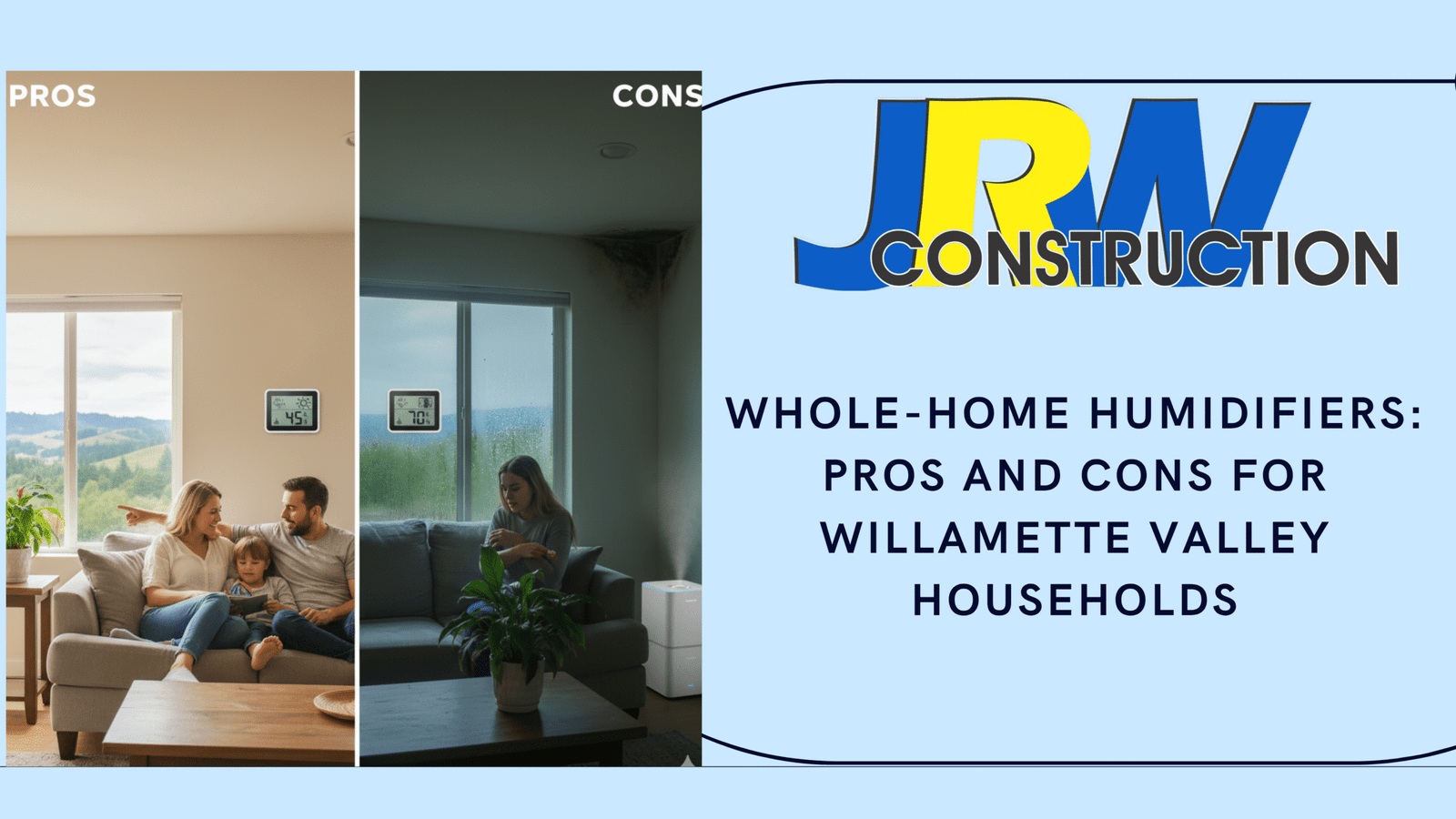
For many homeowners in the Willamette Valley, maintaining a comfortable and healthy indoor environment goes beyond just temperature control. Humidity levels play a crucial role in indoor air quality, comfort, and even the longevity of your home’s structure and furnishings. That’s where whole-home humidifiers come into the picture.
Unlike portable units, whole-home systems integrate directly with your HVAC system, providing balanced humidity throughout every room. But like any home upgrade, they come with both benefits and potential drawbacks. Here’s a complete guide to the pros and cons of whole-home humidifiers for households in the Willamette Valley.
1. Why Humidity Control Matters in the Willamette Valley
The Willamette Valley’s climate is known for cool, wet winters and dry summers. Indoor heating during colder months can quickly strip moisture from the air, leading to discomfort, dry skin, respiratory irritation, and even damage to wood floors and furniture.
By installing a whole-home humidifier, homeowners can maintain consistent indoor humidity levels, typically between 30% and 50%, which is ideal for health, comfort, and home preservation.
2. Pro: Improved Indoor Comfort
Dry air can make even a warm home feel uncomfortable. Whole-home humidifiers help balance moisture, preventing dry skin, scratchy throats, chapped lips, and sinus irritation. This can make your living space feel warmer and cozier, even at lower thermostat settings.
Key benefits for Willamette Valley households:
- Softer, more comfortable air in winter
- Reduced static electricity in the home
- Better breathing comfort, especially for allergy sufferers
3. Pro: Healthier Indoor Air Quality
Balanced humidity can help protect your respiratory system. Dry air often aggravates allergies, asthma, and cold symptoms. By maintaining a healthy moisture level, you can reduce sinus congestion, minimize throat irritation, and support easier breathing.
Additionally, certain viruses and bacteria spread more easily in dry environments. Adequate humidity can help reduce the spread of airborne irritants, making your home a healthier space during flu and cold seasons.
4. Pro: Protection for Your Home and Furnishings
When the air inside your home is too dry, it can cause materials to shrink, crack, or warp. Hardwood floors, wooden furniture, trim, and musical instruments are particularly vulnerable. A whole-home humidifier helps preserve these materials by keeping indoor humidity at a stable level.
Home protection benefits include:
- Preventing cracks in wood floors and furniture
- Reducing gaps in doors and windows
- Protecting paint and finishes from premature wear

5. Pro: Energy Efficiency and Cost Savings
When indoor air has the right level of humidity, it feels warmer at lower temperatures. That means you can lower your thermostat without sacrificing comfort, reducing energy usage during cold Willamette Valley winters.
How it saves money:
- Lower heating costs due to improved comfort
- Less strain on HVAC systems
- Extended lifespan of HVAC equipment by maintaining optimal indoor air conditions
6. Pro: Low Maintenance Compared to Portable Units
Portable humidifiers require frequent refilling, cleaning, and monitoring to avoid mold and bacterial growth. Whole-home humidifiers are connected to your plumbing system and controlled automatically, making them much easier to maintain. With regular annual servicing, they operate quietly and efficiently without daily upkeep.
Maintenance perks:
- No daily refilling of water tanks
- Fewer units to clean and monitor
- Consistent performance year-round
7. Con: Upfront Installation Costs
One of the biggest drawbacks of whole-home humidifiers is the initial investment. Unlike portable units, these systems require professional installation, which can involve a few hundred to a couple of thousand dollars, depending on the system’s size and complexity.
However, for many Willamette Valley homeowners, this cost is offset by long-term energy savings and improved home protection.
8. Con: Requires Professional Installation and Maintenance
While portable units can be plugged in and used right away, whole-home humidifiers require integration with your HVAC system. That means you’ll need a qualified HVAC professional for installation and seasonal maintenance.
Without proper installation, the system may not distribute moisture evenly, or worse, it could lead to leaks or inefficiencies.
9. Con: Risk of Over-Humidification if Not Monitored Properly
While humidity is beneficial, too much moisture can cause problems, such as condensation on windows, mold growth, and damage to paint or drywall.
Modern whole-home humidifiers typically come with humidistats or smart controls to prevent over-humidification, but regular checks and proper calibration are still important to avoid issues.
10. Con: Not Ideal for Every Home
Whole-home humidifiers work best with central HVAC systems. If your home uses alternative heating solutions or lacks ductwork, installation can be more complex or not feasible. In such cases, homeowners may need to explore alternative humidity control options, like hybrid or room-specific systems.
11. Choosing the Right System for Your Willamette Valley Home
Not all whole-home humidifiers are created equal. The best system for your home depends on:
- Home size and layout
- Existing HVAC system
- Local climate and personal comfort needs
- Budget and energy goals
Common types of whole-home humidifiers include:
- Bypass humidifiers – cost-effective and simple to maintain.
- Fan-powered humidifiers – more efficient with faster moisture delivery.
- Steam humidifiers – best for precise humidity control and larger homes.
12. Professional vs. DIY Installation
Although some homeowners may consider installing a humidifier themselves, professional installation is strongly recommended. Technicians ensure the system is compatible with your HVAC, correctly calibrated, and safely installed to avoid leaks and air quality issues.
Professional installation ensures:
- Proper humidity control
- System efficiency and longevity
- Warranty protection
13. Regular Maintenance for Long-Term Performance
A whole-home humidifier doesn’t require constant attention, but routine seasonal maintenance keeps it working efficiently. This may include:
- Replacing filters or pads
- Cleaning the water panel or distribution tray
- Checking for leaks or buildup
- Calibrating the humidistat
Call to Action
Proper care helps avoid mold growth and ensures the system supports healthy indoor air year-round. Contact us today!