
Introduction
The Willamette Valley in Oregon is known for its beautiful landscapes, moderate temperatures, and, most notably, its wet, damp climate. While the region’s weather keeps everything lush and green, it also creates unique challenges for homeowners when it comes to roofing. Shingle roofs in particular can deteriorate faster without proper care. One often overlooked but highly effective solution is roofing. Proper ventilation not only regulates indoor comfort but also significantly extends the lifespan of shingles.
In this blog, we’ll explore How Roof Ventilation Extends Shingle Life in the Willamette Valley’s Climate, the risks of poor ventilation, and how homeowners can maximize the durability of their roofs with the right ventilation system.
Why Roof Ventilation Matters in Damp Climates
Roof ventilation is the process of allowing airflow in and out of your attic space to balance moisture and temperature levels. In climates like the Willamette Valley, where rain is frequent and humidity is high, moisture buildup in your attic can wreak havoc on shingles and the underlying structure.
Benefits of proper roof ventilation:
- Moisture Control: Prevents mold, mildew, and rot from damaging roof decking.
- Temperature Regulation: Keeps attics cooler in summer, reducing thermal stress on shingles.
- Shingle Longevity: Protects shingles from curling, cracking, and premature aging.
- Energy Efficiency: Reduces heating and cooling costs by balancing attic air.
Without ventilation, shingles bear the brunt of excess heat, trapped moisture, and weather fluctuations, common factors in the Willamette Valley.
The Role of Climate in Shingle Wear
Willamette Valley’s unique challenges:
- High Humidity – Constant moisture increases the risk of algae growth and shingle decay.
- Frequent Rain – Water can seep into unventilated attics, leading to rot.
- Seasonal Temperature Swings – Shingles expand and contract, weakening faster if attics trap heat.
Example:
A roof in the Willamette Valley with inadequate ventilation may last 5–7 years less than the same roof in a drier climate. That’s a costly reduction in lifespan that could otherwise be avoided with a well-designed ventilation system.
How Ventilation Protects Shingles from Moisture Damage
Shingles are designed to withstand rain, but not continuous exposure to moisture from underneath. When attics trap humid air, condensation builds up and compromises the roof structure.
Key points:
- Condensation drips can cause wood rot beneath shingles.
- Moisture weakens adhesives, leading to shingle loosening.
- Trapped dampness increases the risk of moss growth, which damages shingle granules.
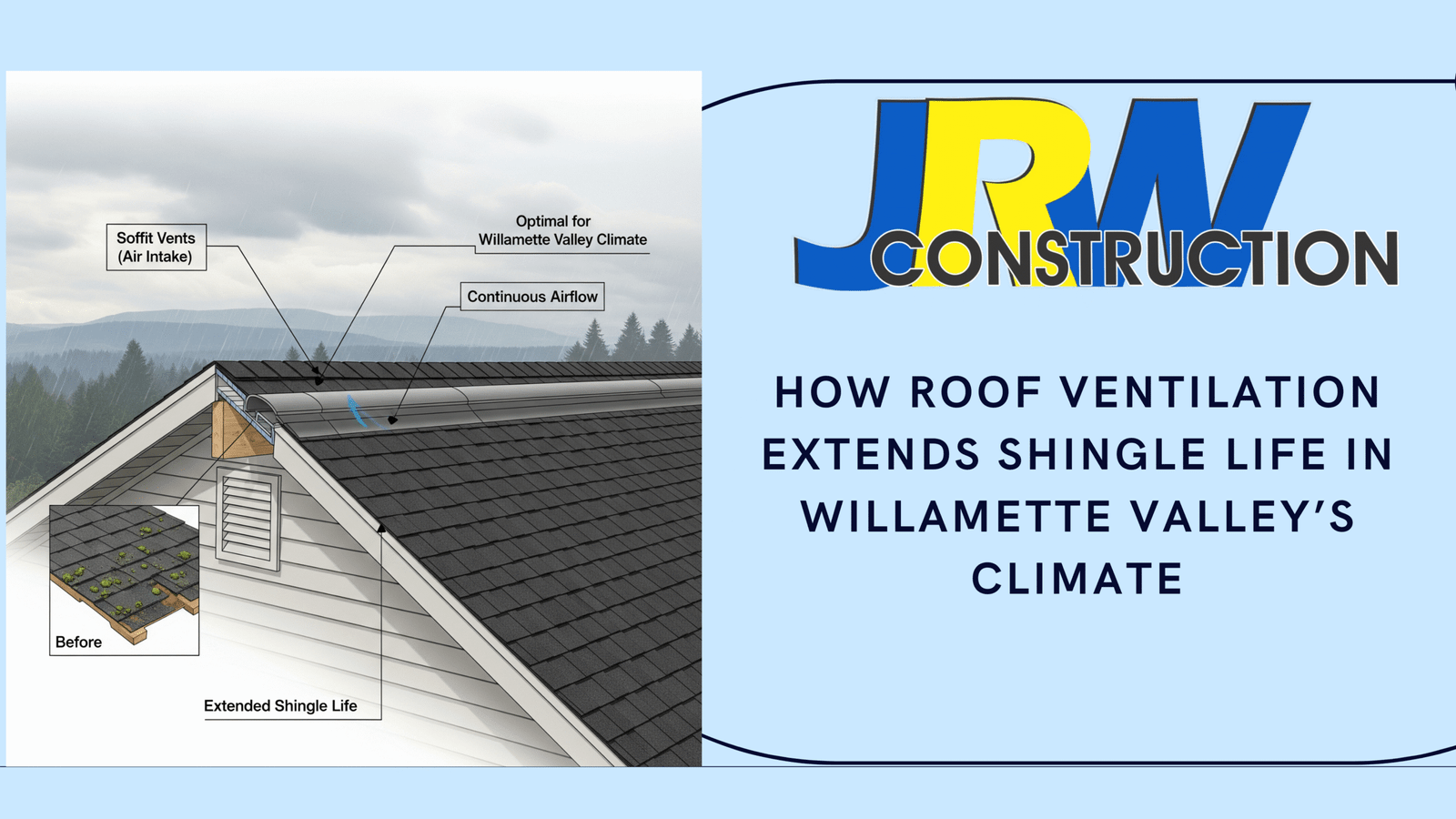
By installing ridge vents, soffit vents, or gable vents, homeowners allow damp air to escape and fresh air to circulate—keeping shingles dry and intact.
Temperature Control and Shingle Preservation
In summer, even in the Willamette Valley’s mild heat, attics can reach over 120°F without ventilation. Excessive attic heat:
- Bakes shingles from underneath.
- Causes warping, curling, or blistering.
- Shortens roof life dramatically.
How ventilation helps:
- Releases trapped heat through ridge vents.
- Draws in cooler outdoor air via soffit vents.
- Prevents thermal stress on shingles during seasonal changes.
Signs of Poor Roof Ventilation in the Willamette Valley
If you live in Eugene, Salem, or anywhere in the valley, look out for these indicators:
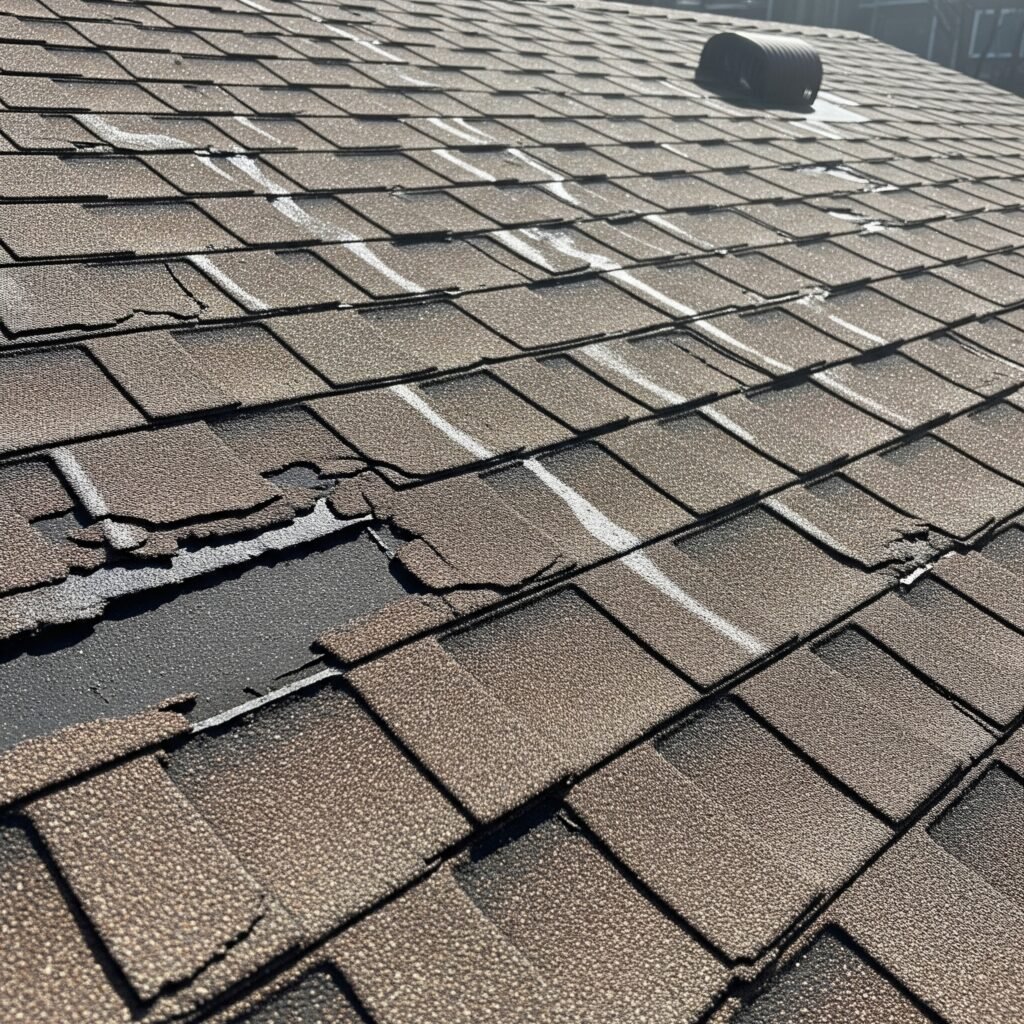
- Shingles curling or cracking prematurely.
- Black streaks or algae growth on shingles.
- Moisture stains or mildew odors in the attic.
- Rising energy bills are due to poor insulation and a ventilation balance.
- Ice dams form in colder seasons (rare but possible in higher elevations).
Catching these signs early can save homeowners thousands in roof repairs or replacements.
Ventilation Systems That Work Best for Willamette Valley Homes
Not all ventilation systems are equal. For the damp conditions of the Willamette Valley, homeowners should consider:
- Ridge Vents – Installed along the peak of the roof to release hot, moist air.
- Soffit Vents – Located under the eaves to draw in fresh air from outside.
- Gable Vents – Positioned at the ends of attics for cross-ventilation.
- Powered Ventilators – Electric or solar fans that actively remove hot/moist air (best for larger homes).
Combining ridge and soffit vents provides the most balanced and effective airflow for shingle protection.

Long-Term Benefits of Proper Roof Ventilation
Homeowners in the Willamette Valley who invest in ventilation reap benefits beyond shingle longevity:
- Lower Maintenance Costs: Less frequent need for roof repairs.
- Energy Savings: HVAC systems run more efficiently.
- Improved Indoor Air Quality: Reduced mold, mildew, and allergens.
- Enhanced Property Value: A well-ventilated roof is a selling point in damp climates.
Professional Roof Ventilation Installation in Willamette Valley
DIY installation might seem tempting, but proper ventilation requires expertise. Local roofing professionals understand the valley’s climate and can design a system tailored to your home.
When hiring a contractor, ensure they:
- Inspect your attic for moisture and airflow patterns.
- Recommend the right combination of ridge, soffit, or gable vents.
- Use high-quality materials suited for damp climates.
Conclusion
In the Willamette Valley, the combination of humidity, frequent rain, and fluctuating temperatures makes roof ventilation more than just a comfort feature; it’s a necessity. By ensuring proper airflow in your attic, you can protect your shingles from premature wear, reduce energy costs, and extend the life of your entire roofing system.
If you’re noticing shingle damage or attic moisture, it may be time to consult with a roofing professional about improving your ventilation system.
Call-to-Action
Looking to maximize the lifespan of your roof in the Willamette Valley? Our team specializes in roof inspections, ventilation upgrades, and shingle care tailored to Oregon’s climate. Contact us today to schedule a consultation and protect your investment.