
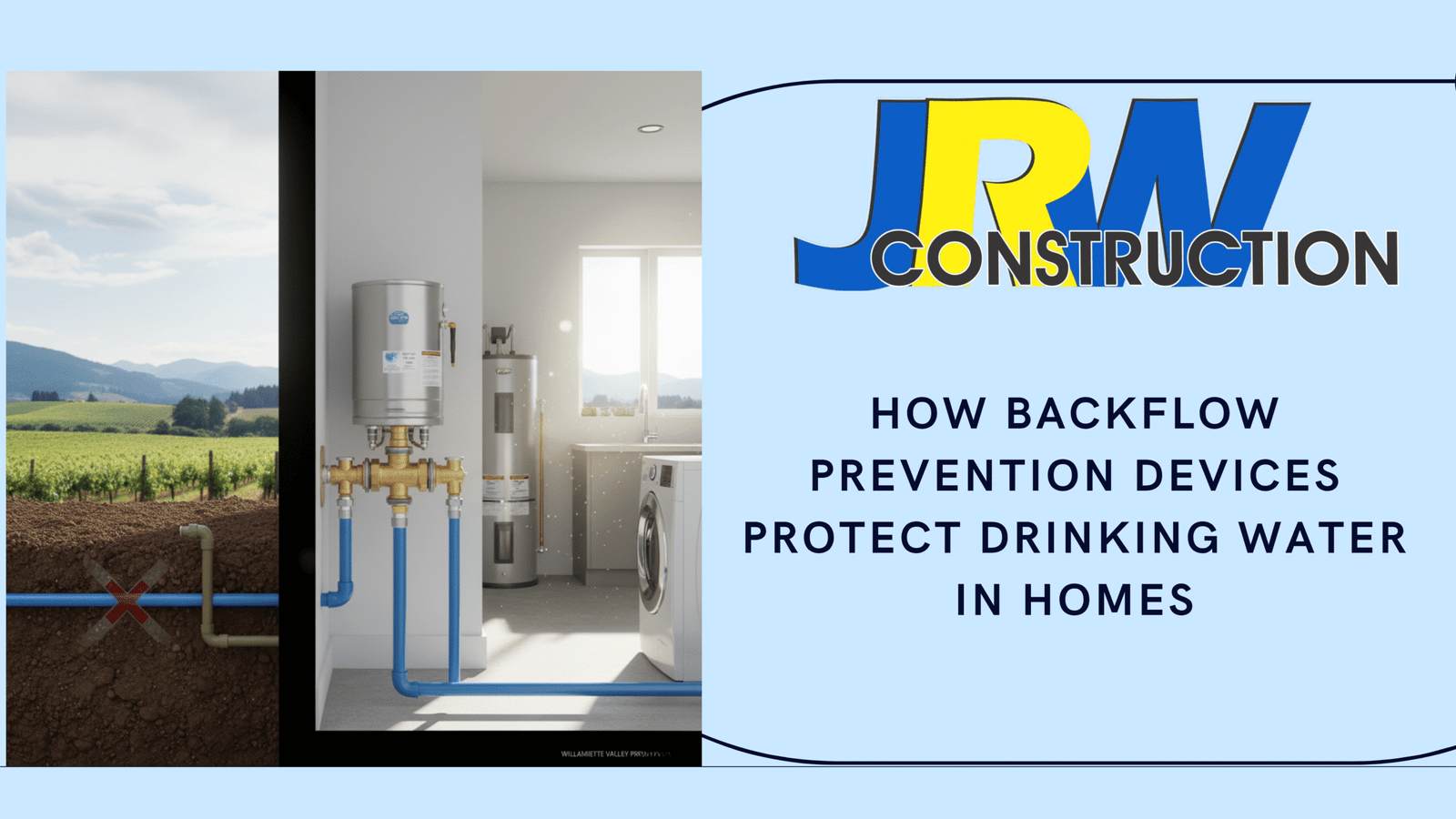
Clean drinking water is essential for every household in the Willamette Valley, but not every homeowner realizes how easily contamination can occur. One of the biggest hidden threats to water safety is backflow, a situation where dirty or contaminated water reverses direction and flows back into your home’s clean water supply.
That’s where backflow prevention devices come in. These small but critical components protect your water supply from pollutants, bacteria, and chemicals that could enter through irrigation systems, washing machines, or outdoor hose connections.
In this blog, we’ll explain how backflow happens, why prevention devices are crucial, and why professional installation, not DIY, is the only way to ensure long-term protection for your home and family.
Understanding Backflow and How It Happens
Backflow occurs when the normal flow of water in your plumbing system is reversed. Instead of moving clean water toward your faucets and appliances, it flows backward, potentially pulling contaminated water into your drinking supply.
There are two main types of backflow:
- Backpressure: Happens when water pressure inside the home (from boilers or pumps) exceeds the pressure in the main supply line.
- Backsiphonage: Occurs when there’s a sudden drop in the main water pressure, like during a water main break or heavy firefighting usage, causing water to be sucked backward.
Both situations can allow harmful contaminants, such as fertilizers, pesticides, or bacteria, to infiltrate your water system.
What Is a Backflow Prevention Device?
A backflow prevention device is a mechanical valve installed in your plumbing system that ensures water only flows in one direction. It automatically closes if reverse flow is detected, blocking contaminated water from entering your clean supply.
Common types include:
- Atmospheric Vacuum Breakers (AVB) – Used in irrigation systems.
- Pressure Vacuum Breakers (PVB) – Designed for outdoor spigots and sprinklers.
- Double Check Valve Assemblies (DCVA) – Installed in larger residential or commercial systems.
- Reduced Pressure Zone Assemblies (RPZ) – The most advanced option, ideal for high-risk contamination points.
Each device serves a specific purpose, and professional plumbers in the Willamette Valley select and install the right type based on your home’s plumbing design and water usage.
Why Professional Installation Matters
Installing a backflow prevention device isn’t as simple as connecting a valve; it requires precise pressure calibration, correct placement, and compliance with local plumbing codes.
A licensed plumber ensures your device is properly installed and tested. Improper setup could lead to leaks, reduced water pressure, or failure during critical situations. Additionally, Willamette Valley municipalities often require certified testing and documentation to confirm your system is functioning correctly.
DIY installation, on the other hand, can void warranties, violate code requirements, and expose your family to potential health hazards.
Professional Installation Benefits
When you hire a professional backflow prevention specialist, you gain:
- Accurate device selection based on your home’s water layout.
- Compliance with Willamette Valley water safety regulations.
- Precision installation for optimal functionality.
- Ongoing maintenance and annual testing to ensure reliability.
Professionals also maintain detailed service records, useful for homeowners’ insurance and city compliance reports.
Signs Your Backflow Device Needs Service or Replacement
Even high-quality backflow prevention devices need regular inspections to remain effective. Here are a few signs that indicate service is needed:
- Noticeable changes in water pressure.
- Discolored or cloudy water coming from faucets.
- Unusual odors or tastes in tap water.
- Visible leaks near your backflow assembly.
Ignoring these warning signs could lead to contamination and costly plumbing repairs. A professional plumber can perform diagnostic tests to verify if the device is still functioning as intended or needs replacement.

Annual Testing – A Must for Water Safety
In many areas of the Willamette Valley, annual backflow device testing is required by law. Certified technicians use specialized gauges to check for pressure consistency, valve performance, and leak prevention.
Testing helps detect early signs of wear or malfunction before they cause problems. If the device fails inspection, immediate repair or replacement ensures continuous water safety.
Common Sources of Backflow Contamination in Homes
Even homes with modern plumbing can face backflow risks. Common sources include:
- Irrigation systems: Fertilizer and pesticide backflow can contaminate drinking water.
- Outdoor hose bibs: When connected to pools or cleaning chemicals.
- Boilers and water heaters: Can create backpressure issues.
- Dishwashers and washing machines: Contaminated water may back up into clean lines.
Installing the correct device at these key connection points helps maintain a closed, contamination-free water system throughout your home.
The Health Risks of Ignoring Backflow Prevention
The consequences of ignoring backflow prevention can be serious. Contaminated water can introduce bacteria like E. coli, chemicals, and heavy metals into your home’s supply, posing risks of gastrointestinal illness, skin irritation, or worse.
Municipal water authorities in the Willamette Valley are strict about compliance because even a single unprotected property can threaten the entire neighborhood’s water system.
Professional backflow protection ensures not only your family’s safety but also contributes to community-wide water purity.
Why DIY Isn’t Worth the Risk
While DIY tutorials make backflow installation look simple, improper fitting or incorrect device selection can lead to system failure, leaks, or contamination. Professionals bring specialized equipment, years of experience, and knowledge of local regulations to ensure flawless results.
In the Willamette Valley, it’s not just about convenience; it’s about legal compliance and public safety. Homeowners who attempt DIY backflow installation risk fines or code violations if their system doesn’t meet local standards.
Call to Action – Protect Your Family’s Water Supply Today
At JRW Construction, we provide certified backflow prevention installation, testing, and maintenance services across the Willamette Valley. Our experienced team ensures your drinking water stays safe, your plumbing remains code-compliant, and your system functions reliably all year long.
Don’t wait until it’s too late, schedule your backflow inspection or installation today and enjoy the peace of mind that comes with knowing your home’s water is 100% protected.
Call us now or book online to set up a consultation with our licensed plumbing experts.