
Building in the Willamette Valley means planning for moisture and lots of it. With steady rainfall, damp winters, and high humidity levels, selecting the right framing lumber is critical for long-term structural durability.
Whether you’re building in Salem, Eugene, Corvallis, or surrounding communities, choosing framing lumber designed to withstand wet conditions can prevent rot, mold, warping, and costly structural repairs.
Here’s what homeowners, contractors, and builders need to know about selecting framing lumber for the Pacific Northwest climate.
Why Moisture Is a Major Concern in the Willamette Valley
The Willamette Valley’s marine-influenced climate brings:
- Extended rainy seasons
- High annual precipitation
- Morning fog and damp air
- Limited sun exposure in winter
- Slow drying conditions
When framing lumber absorbs moisture and fails to dry properly, it can lead to:
- Wood rot
- Fungal growth
- Structural weakening
- Fastener corrosion
- Interior mold issues
Choosing the right lumber from the beginning reduces long-term risk.
Best Types of Framing Lumber for Wet Climates
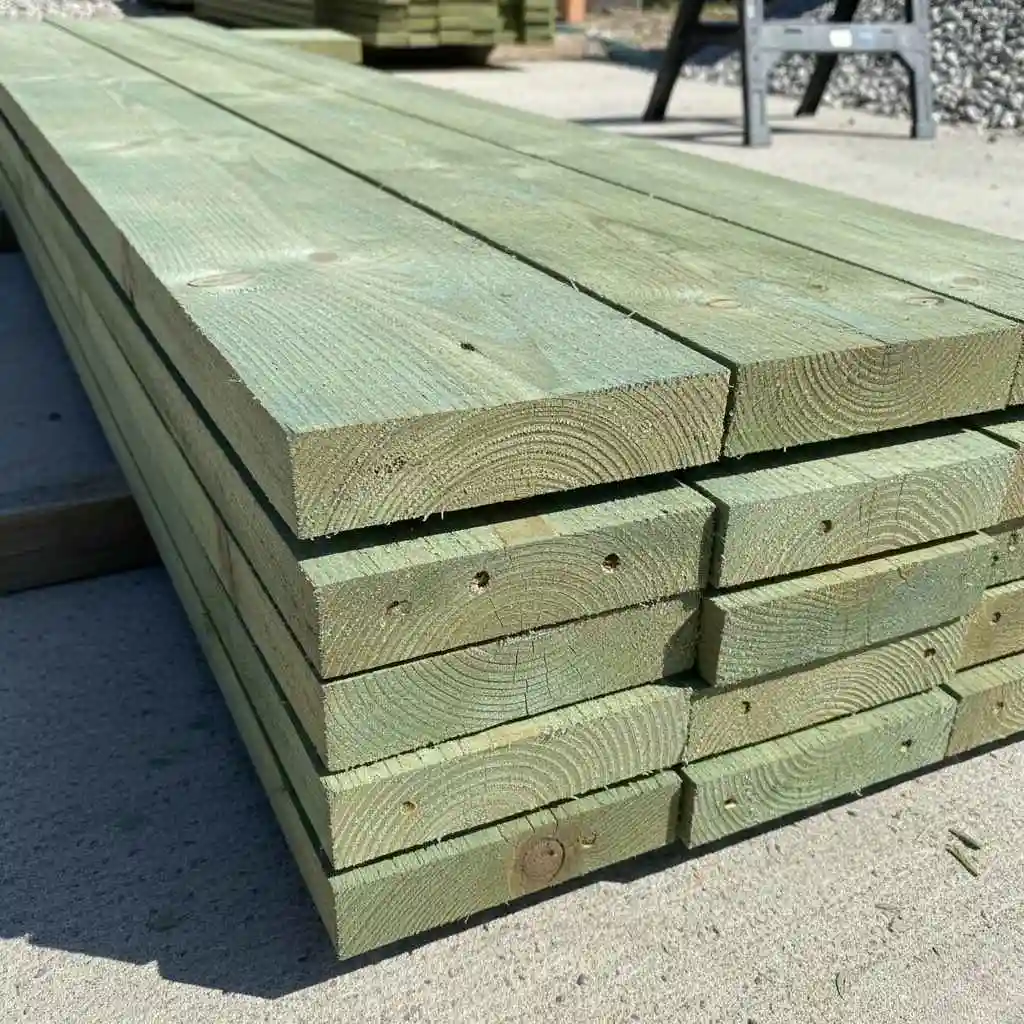
Pressure-Treated Lumber
Pressure-treated lumber is infused with preservatives that resist moisture, insects, and fungal decay.
It is ideal for:
- Sill plates
- Exterior wall framing
- Deck structures
- Areas close to foundations
In wet regions like the Willamette Valley, pressure-treated sill plates are especially important where framing meets concrete.
Douglas Fir-Larch
Willamette Valley builders commonly use Douglas Fir due to its strength and availability.
Benefits include:
- High structural strength
- Good load-bearing capacity
- Local availability
- Strong performance when properly sealed
However, it must be protected from prolonged exposure to standing moisture.
Engineered Lumber (LVL & Glulam)
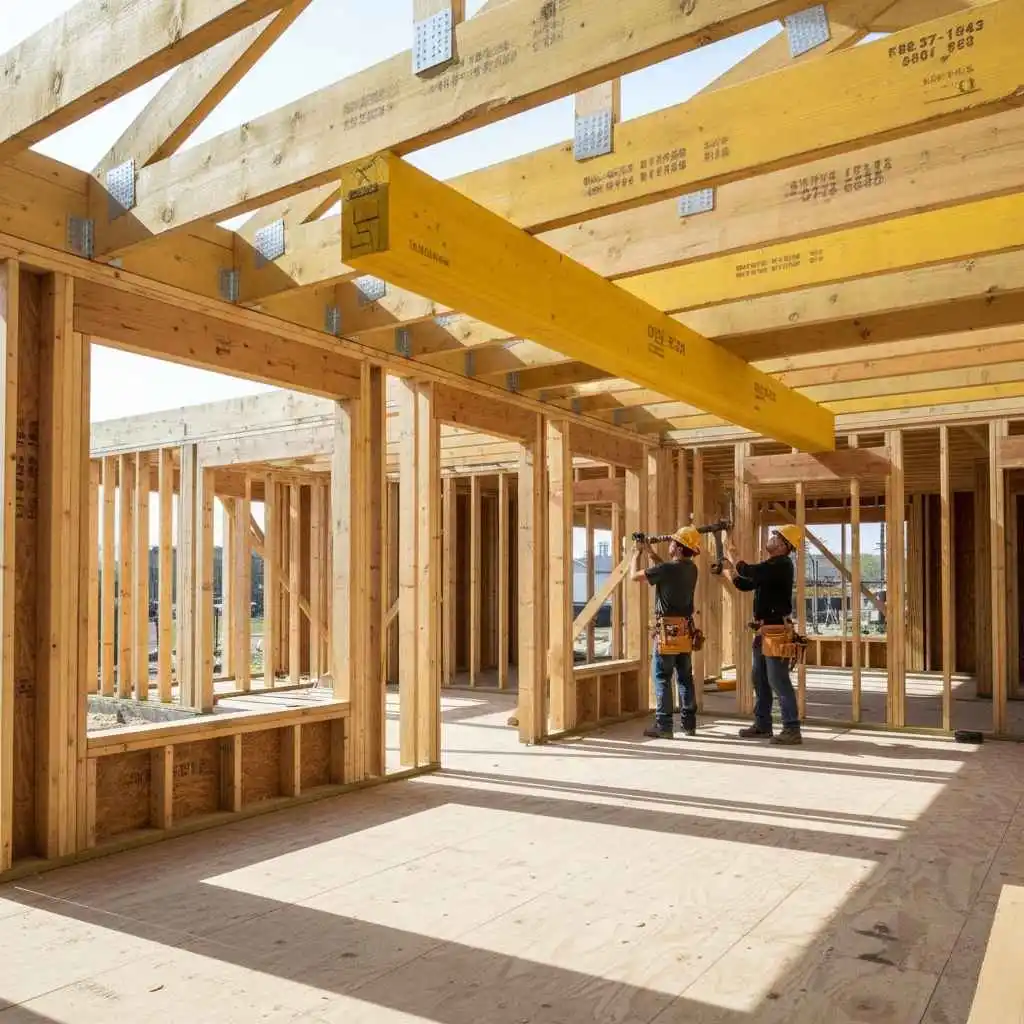
Engineered wood products like LVL (laminated veneer lumber) and glulam beams offer:
- Dimensional stability
- Reduced warping
- Strong structural integrity
When properly installed and protected from water intrusion, engineered products perform well in wet climates.
Kiln-Dried vs. Green Lumber
In damp environments like the Willamette Valley, moisture content matters.
Kiln-Dried Lumber:
- Lower moisture content
- Reduced shrinkage
- Less warping
- Better dimensional stability
Green Lumber:
- Higher moisture content
- Greater risk of shrinkage and twisting as it dries
- More susceptible to mold during extended wet exposure
Whenever possible, kiln-dried lumber is preferred for framing in moisture-heavy climates.
Importance of Proper Lumber Storage On-Site
Even the best lumber can fail if stored improperly during construction.
In cities like Salem and Eugene, rain can soak exposed framing materials quickly.
Best practices include:
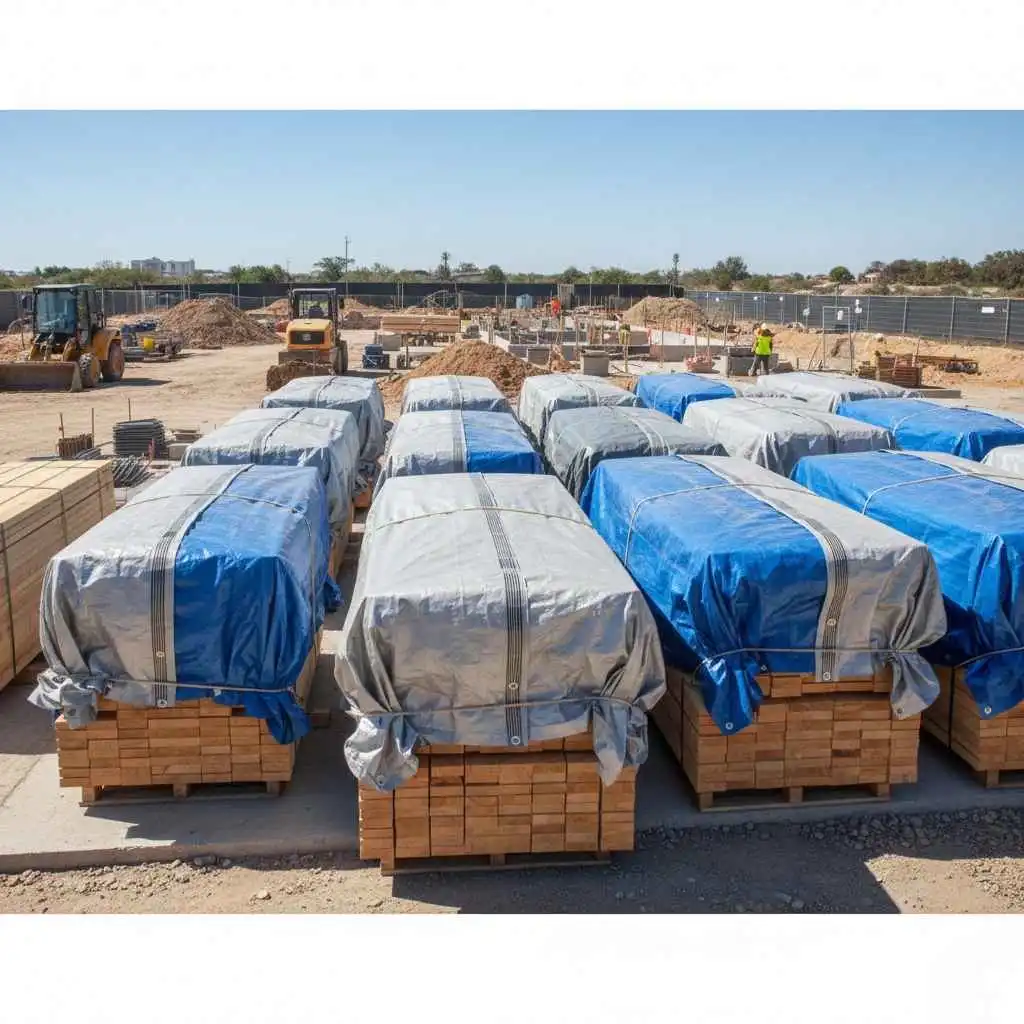
- Elevating lumber off the ground
- Covering stacks with breathable tarps
- Allowing air circulation
- Minimizing long-term exposure before enclosure
Moisture management begins before installation.
Fasteners Matter in Wet Climates
Moisture doesn’t just affect wood; it impacts hardware too.
Use corrosion-resistant fasteners such as:
- Hot-dipped galvanized nails
- Stainless steel screws
- Structural fasteners rated for exterior exposure
This prevents rust that can compromise structural connections.
Building Envelope Is Just as Important
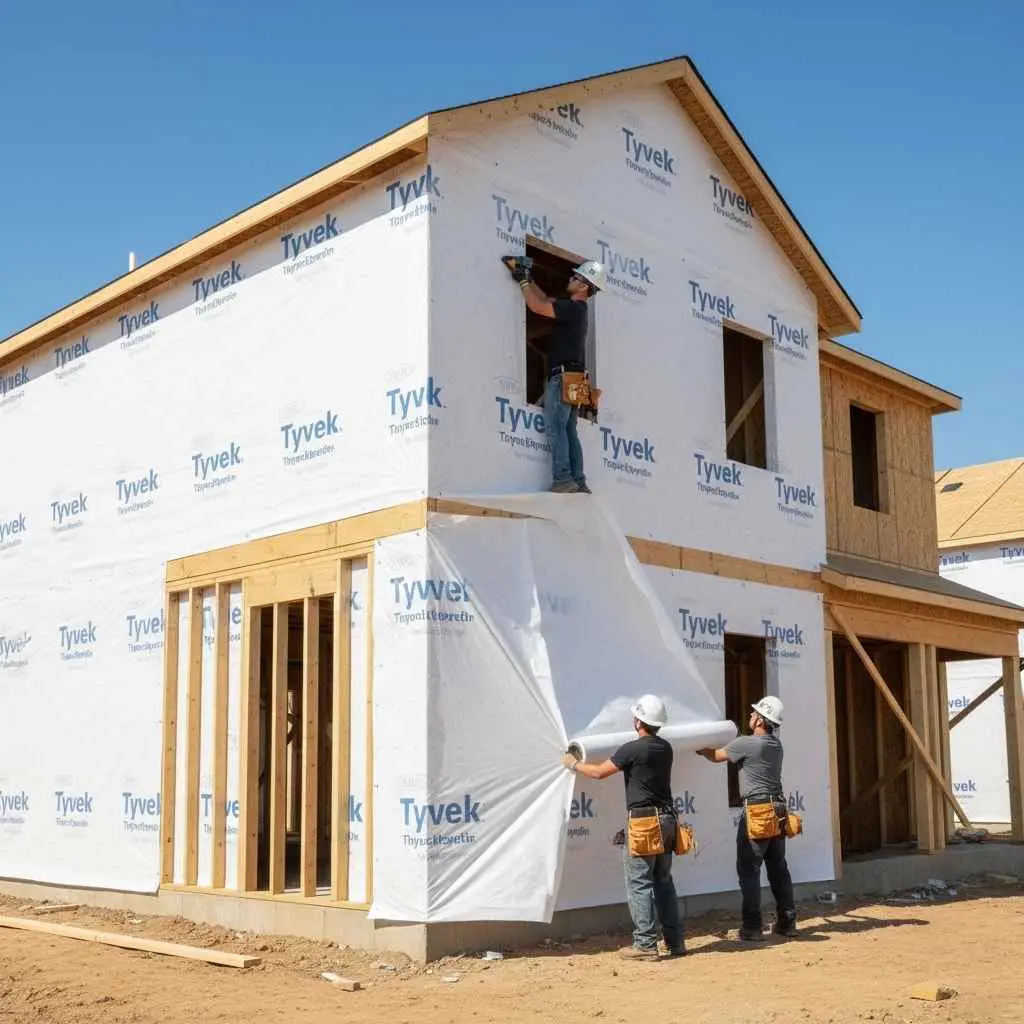
Even moisture-resistant lumber needs protection from water intrusion.
A properly designed building envelope includes:
- House wrap
- Flashing around openings
- Proper roof overhangs
- Effective drainage systems
- Vapor barriers were required
Homes built in the Willamette Valley must allow structures to dry out properly after wet weather.
Real Example: Framing Upgrade in Corvallis
A homeowner in Corvallis experienced moisture damage in a detached garage due to untreated framing lumber exposed to prolonged dampness.
During reconstruction, we replaced:
- Untreated sill plates with pressure-treated lumber
- Standard fasteners with galvanized hardware
- Added moisture barriers between the concrete and the framing
With these upgrades, the structure is now far better equipped to handle Oregon’s wet winters.
Planning for moisture upfront prevents expensive repairs later.
Signs Framing Lumber May Be Failing
Watch for:
- Soft or spongy wood
- Dark staining
- Musty odors
- Visible mold
- Cracking or splitting
- Sagging structural components
If you notice these issues, a professional inspection is recommended.
Why Professional Lumber Selection Matters
Every building project in the Willamette Valley faces unique moisture conditions depending on:
- Site elevation
- Drainage patterns
- Tree coverage
- Sun exposure
- Soil type
Professional contractors understand how to match framing materials to local environmental demands.
Using the wrong lumber can shorten a structure’s lifespan significantly.
Build Smart for Willamette Valley Weather
Rain and damp air are part of life in the Willamette Valley. Choosing the right framing lumber ensures your structure remains strong, stable, and moisture-resistant for decades.
From pressure-treated sill plates to properly stored kiln-dried framing materials, smart decisions during construction protect your investment long-term.
Call to Action
If you’re planning a new build or structural renovation in the Willamette Valley, consult with experienced professionals who understand how to build for Oregon’s wet climate. Contact us today!